Flea Markets and the Joy of Rummaging
October 1, 2025
Culture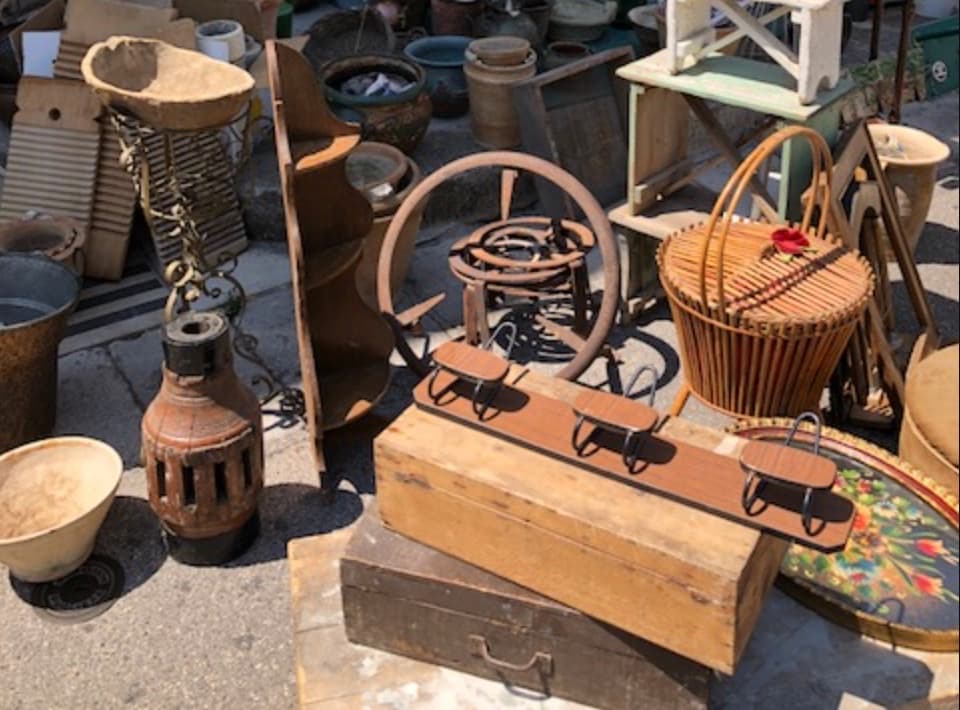
A morning spent wandering through a flea market with absolutely nothing in mind.
There are certain activities in Salento that don’t require an agenda. A passeggiata at dusk. A long Sunday pranzo. And, perhaps most delightfully, a morning spent wandering through a flea market with absolutely nothing in mind.
The joy of rummaging is not about hunting for something specific. It is about letting your eye lead. About discovering that you needed something only after you’ve found it.
Across Puglia and Salento, Sunday markets rotate through towns large and small. In Lecce, stalls gather near Via XX Settembre on the fourth Sunday of the month. In Bari, the historic center fills on the first Sunday. Ostuni hosts its market on the second Sunday, Martina Franca on the third. Nardò, Cisternino, Mesagne, Francavilla Fontana — each has its place in the monthly rhythm. The exact locations can shift with the seasons, but the cadence remains constant: Sunday morning, early start, and winding down before pranzo.
Arrive at 7 a.m., and you will find vendors still arranging their tables. By 1 or 2 p.m., everything is packed away — Sunday lunch is sacred in Puglia and not to be interfered with.
Unlike the ornate antiques of Venice or the polished vintage boutiques of Milan, the markets here feel different. If there is one word that describes them, it might be “pure.” The objects you encounter are rarely extravagant. They were not made for decoration. They were typically made for use.
And that is precisely their charm.
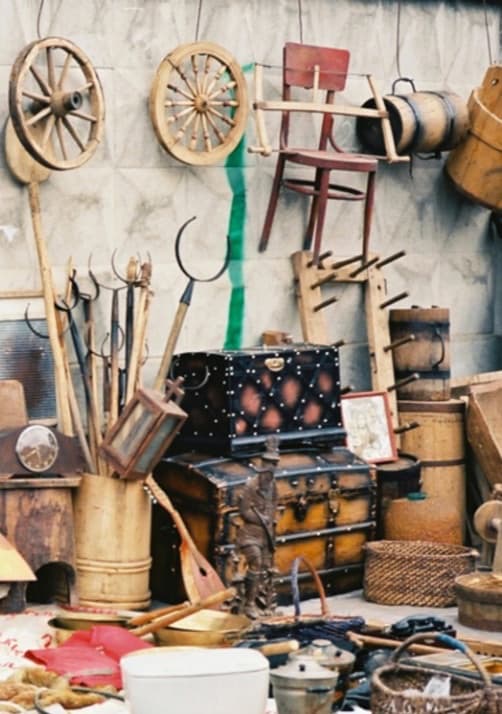
A massive green glass damigiana once used to ferment wine. A copper pentola blackened from decades over an open flame. A wooden maida for kneading dough. A clay pignata that might still carry traces of fava beans slow-cooked over fire. These are not delicate heirlooms removed from daily life. They are objects born of necessity.
Strolling through the markets, you begin to notice how many of these pieces still exist in local homes. An 88-year-old aunt might still use her terracotta pot to cook legumes. A mortar and pestle is not decorative — it is practical. A scaldino, once used as an iron, feels ingenious rather than quaint.
In Puglia, beauty often emerges from purpose.
There is also something deeply human about these markets. Vendors greet one another by name. Conversations drift easily between dialect and Italian. Everything is negotiable — and that negotiation is part of the ritual. It is rarely aggressive; more often it feels like a shared performance. A smile, a shrug, a final counteroffer. You walk away not just with an object, but with a story.
Even when you are not looking to purchase anything, the experience is immersive. You are participating in something locals have done for generations. Sunday is for mass, for family lunch, and for mercati. Many vendors travel between towns throughout the month, so the offerings share a familiar rhythm: ceramics, textiles, woven baskets, copper cookware, vintage linens preserved with astonishing care.
The textiles, especially, tell stories. Crisp lenzuola folded tightly, embroidered by hand decades ago. Sacchi di juta once used to carry grain. A vestaglia that feels like it could have belonged to someone’s grandmother. These are pieces that once lived in real homes, shaped by hands and seasons.
Ceramics are everywhere. Cantarelle once used to transport wine and water. Salaturi that preserved vegetables in salt. Massive limo bowls for washing and storage. And of course the pumo — that conical good-luck charm representing a flower bud about to bloom, a quiet promise that good things are coming.
If you do have something specific in mind, the markets are reliable. Rolling pins sturdy enough for panzerotti dough. Pleated glass lampshades (paralumi) that seem to appear in nearly every Puglian kitchen. Copper pots that, with a bit of polishing, can live a second life.
But most visitors find that the pleasure lies in the wandering.
You may arrive thinking you are simply browsing. And then an idea forms. A damigiana becomes a statement piece on a terrace. A woven basket finds its way into your kitchen back home. A small acquasantiera — once hung by a doorway for blessings — becomes a quiet reminder of your time here.
It is not about acquiring. It is about observing. Touching. Asking questions. Listening to the stories behind the objects.
And perhaps most importantly, it is about seeing Salento through the lens of everyday life.
Markets reveal a region differently than monuments do. They show you what people cooked with, stored grain in, carried water with. They reveal the rhythm of agricultural seasons and domestic rituals. They reveal how a culture solves problems with what is at hand.
So if you find yourself in Salento on a Sunday morning, consider setting aside a few hours. Go early. Bring cash. Leave space in your suitcase if you must. But more than anything, bring curiosity.
Let your eye wander.
You may not find what you were looking for.
But you might find something better.