Galatina: Between Two Seas
February 28, 2026
Culture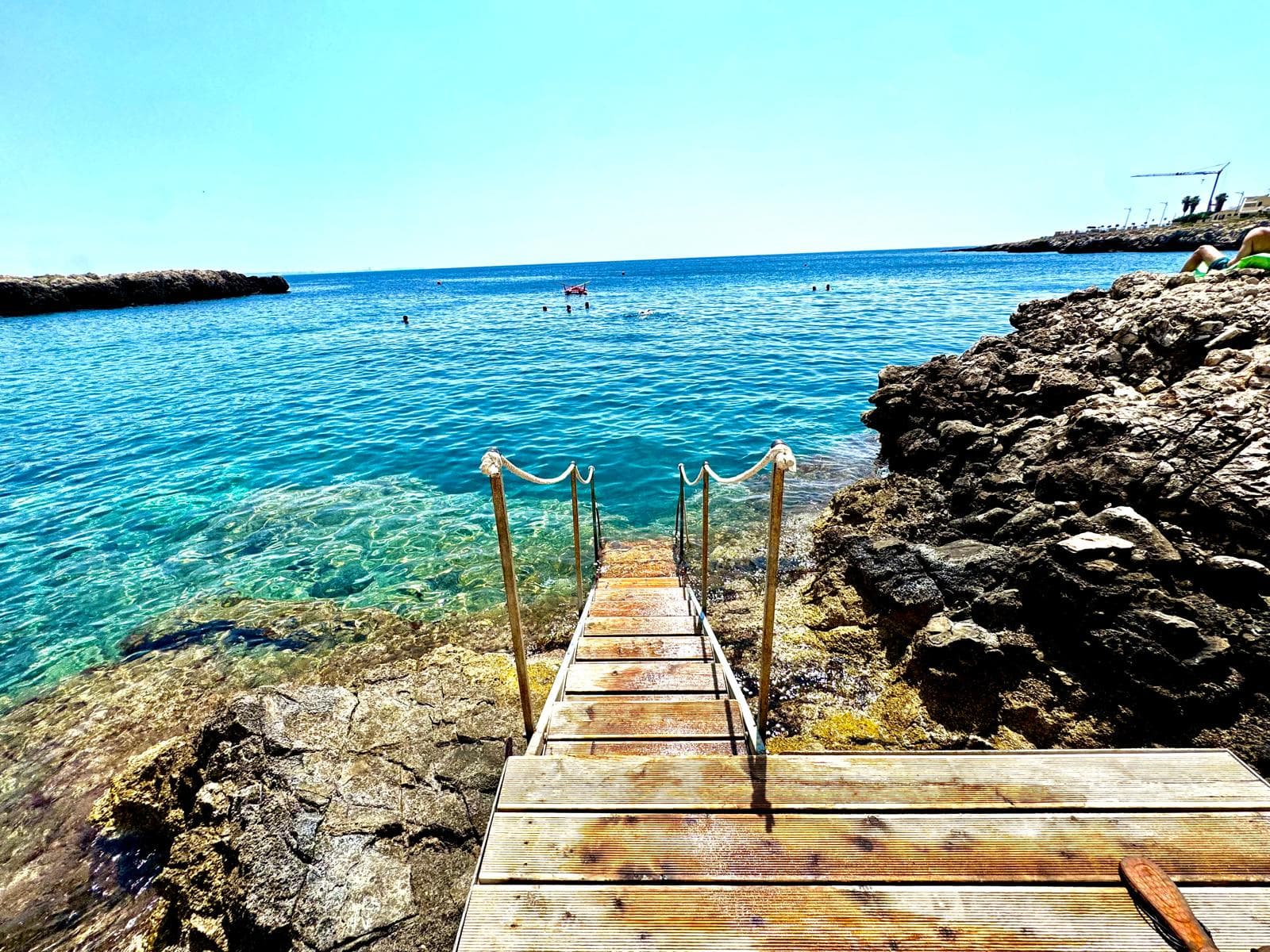
Positioned between the Adriatic and the Ionian, Galatina offers access to two distinct coastlines within thirty to forty minutes — a flexibility that makes it a compelling base for exploring Salento.
In many parts of southern Italy, choosing where to stay means choosing your sea. On the Salento peninsula, however, Galatina offers something more flexible: access to two distinct coastlines within a short drive. To the east lies the Adriatic. To the west, the Ionian. Between them sits Galatina — and properties such as Palazzo Andriani — positioned not on the shore, but at the center of it.
This centrality is not accidental. It reflects geography. Salento narrows as it extends southward, placing Galatina within roughly thirty to forty minutes of markedly different maritime landscapes. Visitors can move from limestone cliffs and deep blue water to shallow, sandy expanses in the span of a morning.
What makes this location compelling is not just proximity to the sea, but proximity to difference.
Choosing the Sea
Along the peninsula, beach selection is often decided daily — not weeks in advance. Locals wake, check the wind, and choose accordingly.
When northern winds disturb the Adriatic, the Ionian side typically remains calmer. When southern currents stir the Ionian, the Adriatic clears. The guiding principle is simple: find the offshore breeze.
Staying inland in Galatina allows for this adaptability. Rather than committing to one coastline and hoping for favorable conditions, visitors retain options. A day at the beach becomes a responsive decision rather than a fixed plan.
This flexibility is one of the quiet advantages of staying at Palazzo Andriani. Its location places guests within reach of both coasts without requiring relocation. You can experience variety without packing and unpacking, without changing towns, without adjusting to new rhythms.
The Adriatic: Limestone and Clarity
Driving east from Galatina leads toward Otranto and Torre dell'Orso, where the Adriatic coastline reveals its geological character.
Here, limestone formations shape the shoreline. The water deepens quickly. Colors shift from turquoise to cobalt within a few meters. Pine forests often meet the sea directly, creating sheltered bays framed by rock and vegetation.
Baia dei Turchi is among the most celebrated stretches — a protected cove where forest gives way to clear, luminous water. Torre dell'Orso, by contrast, presents a dramatic curved inlet punctuated by natural rock formations rising directly from the sea.
For those who prefer a structured setting, Lido La Castellana integrates beach services into the existing contours of the coastline rather than reshaping it.
The Adriatic side feels defined by structure — by rock, by depth, by clarity. It invites swimming, snorkeling, and early morning visits when light sharpens the contrast between stone and water.
The Ionian: Horizon and Sand
To the west, the landscape softens. The Ionian coast opens into longer horizons and gradual seabeds. Beaches extend wide and flat. Water remains shallow for significant distances, shifting through pale shades of blue and green.
Punta Prosciutto is known for its open shoreline and exceptionally clear water. Porto Cesareo offers broad sandy stretches with calm, accessible swimming conditions. Further south, Pescoluse is often described locally for its expansive horizon and light-toned sand.
Beach culture here tends toward longer stays. Lidos provide structured environments with umbrellas, dining, and music. Lido Pizzo sits within a protected natural park near Gallipoli. Bahia del Sol combines dining with open shoreline, while Cotriero is known for a more understated integration with the surrounding landscape.
The Ionian side often appeals to those seeking gradual entry into the sea, longer afternoons, and open vistas. It is less about vertical rock and more about horizontal space.
Where the Seas Converge
Further south, near Santa Maria di Leuca, the Adriatic and Ionian waters meet within the broader Mediterranean basin. From Galatina, this point of convergence remains accessible as a day's journey — a reminder that the peninsula's relationship to the sea is defined by movement rather than fixed proximity.
To stay inland is therefore not to be removed from the coastline, but to approach it selectively.
The Inland Advantage
Choosing Galatina as a base offers more than coastal flexibility. It offers continuity.
Coastal towns in Salento often operate seasonally. From June through August, they fill quickly; outside those months, many restaurants and shops close. Galatina, by contrast, remains a working town year-round. Cafés stay open. Markets continue. Daily life persists independent of tourism cycles.
Staying at Palazzo Andriani places guests within this ongoing rhythm. Mornings begin in a historic town shaped by Baroque architecture and local commerce. Afternoons might unfold on one coast or the other. Evenings return to an urban center with open restaurants and active piazzas rather than shuttered storefronts.
The distance from the shoreline becomes an advantage. It offers access without alignment — a position from which the sea can be approached in multiple forms, on different days, under different conditions.
A Coastal Gateway
Neither coast is inherently preferable. The Adriatic offers limestone drama and depth. The Ionian provides expansiveness and gradual entry. Each reflects a different way of encountering the sea.
What Galatina provides is choice.
Within thirty to forty minutes, you can move between rocky coves and sandy horizons, between forest-framed bays and wide-open beaches. You can select your destination according to wind, light, or mood. You can experience variety without changing your base.
In this way, Galatina is not a seaside town. It is a coastal hub — a gateway positioned between two seas.
For guests staying at Palazzo Andriani, that position translates into freedom. The sea is never far, but it is never singular. Each morning offers the possibility of choosing differently.