The History of Our Frescoes
October 20, 2025
Culture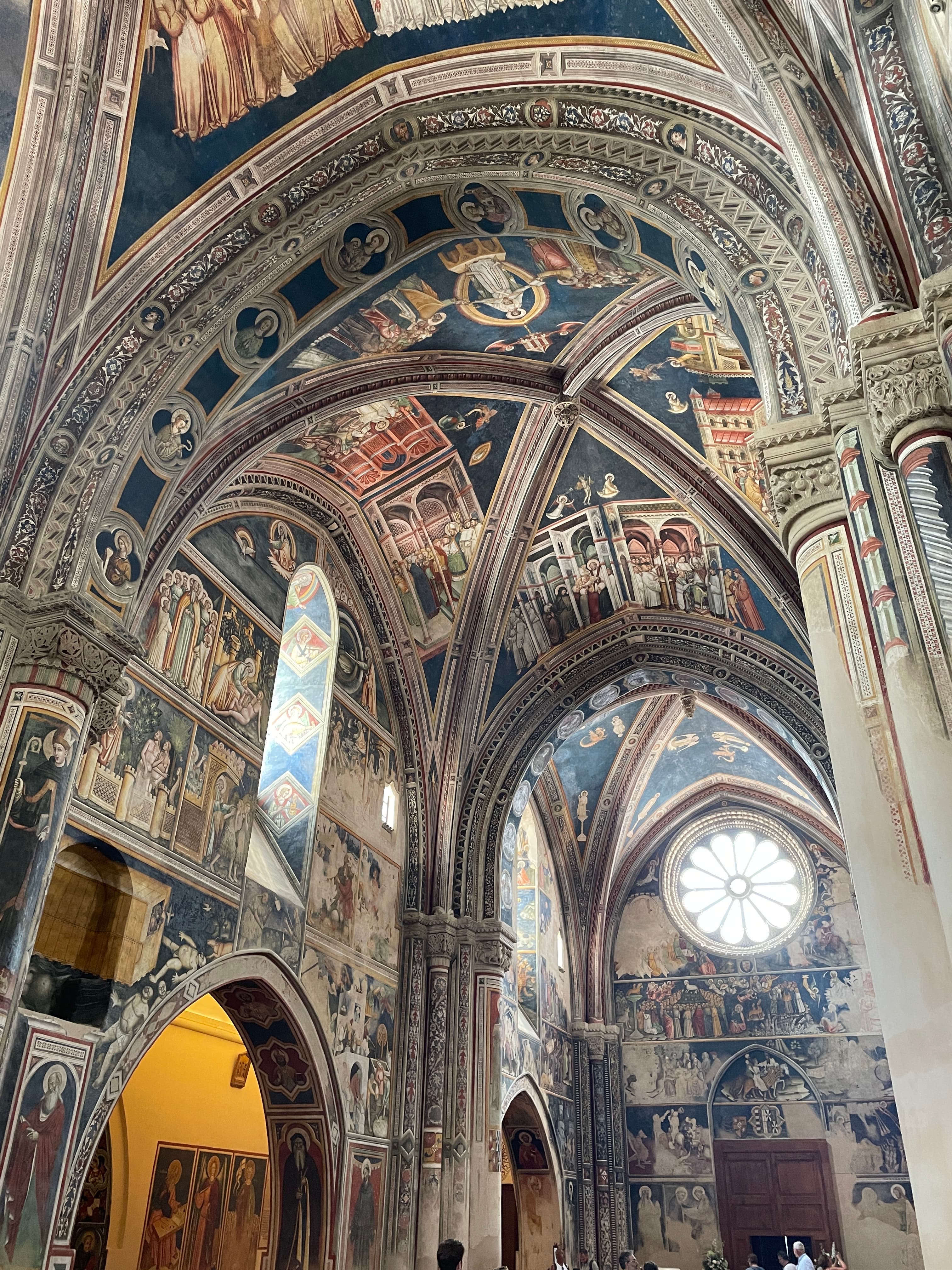
Explore the artistic and architectural significance of the Basilica of Santa Caterina d'Alessandria, home to one of the most extensive medieval fresco cycles in southern Italy.
The Basilica of Santa Caterina d'Alessandria stands near the perimeter of Galatina's historic center not as a monument frozen in time, but as a building continuously shaped by care, use, and preservation. Built at the end of the 14th century under the patronage of Raimondello Orsini del Balzo, the basilica has long been recognized for its artistic and architectural significance. What distinguishes it today, however, is not only the ambition of its original design, but the sustained effort required to protect and interpret it for modern audiences.
Origins of the Basilica and Its Patronage
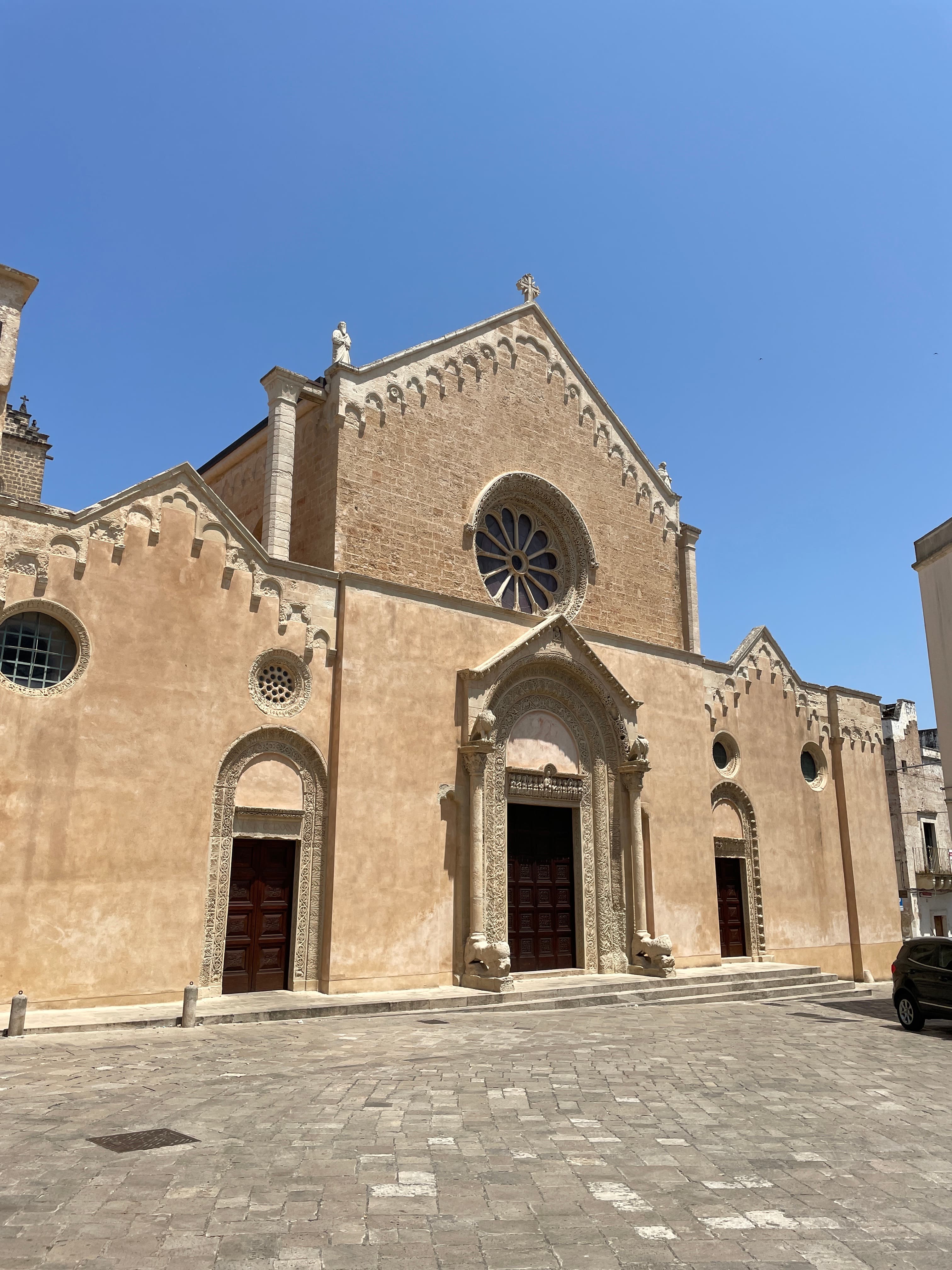
From the outside, the basilica offers little hint of the complexity within. Its facade reflects the Romanesque traditions of southern Italy, tempered by Gothic influences that were spreading across Europe at the time of its construction. The structure itself has endured centuries of environmental exposure, seismic activity, and changes in the surrounding urban fabric. That it remains intact is due as much to deliberate conservation as to the quality of its original materials and craftsmanship.
A Comprehensive Medieval Fresco Cycle
Inside, the basilica reveals one of the most extensive medieval fresco cycles in southern Italy. Covering walls, columns, and vaults across all three naves, the frescoes depict biblical narratives, saints' lives, and theological themes arranged in a coherent visual program. These paintings, executed over several decades, were never intended to be decorative alone; they served as tools of instruction and devotion in a largely illiterate society. Their survival into the present day is remarkable precisely because frescoes-applied directly to plaster-are among the most vulnerable forms of wall painting.
Conserving Fragile Surfaces and Materials
Preservation of Santa Caterina's interior has therefore required careful, ongoing intervention. Conservation efforts over the last century have focused on stabilizing pigments, repairing structural damage, and addressing the effects of humidity and salt infiltration-persistent challenges in Apulian stone buildings. Rather than restoring the frescoes to an imagined original state, conservators have largely adopted a philosophy of restraint: stabilizing what remains, making losses legible, and allowing the passage of time to remain visible.
This approach reflects a broader shift in heritage conservation, where authenticity is understood not as perfection but as continuity. Visitors today encounter frescoes that bear the marks of centuries-faded passages, repaired sections, and subtle variations in color that reveal different phases of work and restoration. These traces are not hidden. Instead, they form part of the story the basilica tells about survival, adaptation, and care.
Stewardship in a Living Religious Space
The basilica's designation as a national monument in the 19th century, and its elevation to minor basilica status in 1992, helped formalize this commitment to preservation. These recognitions brought increased scholarly attention and institutional support, but they also placed new responsibilities on those charged with maintaining the building. Santa Caterina is not a museum in the conventional sense; it remains a functioning religious space. Preservation efforts must therefore balance access, liturgical use, and conservation needs-a delicate equilibrium that continues to shape how the building is managed.
Why Santa Caterina Continues to Draw Visitors
It is this balance that helps explain why Santa Caterina attracts visitors from well beyond the region. Scholars, conservators, and culturally curious travelers are drawn not only by the frescoes themselves, but by the opportunity to encounter a medieval building that has been carefully maintained without being overly mediated. Interpretation is present, but it does not overwhelm the experience. The building is allowed to speak largely through its material presence.
In a time when many historic sites are heavily curated or reconstructed, Santa Caterina offers something quieter and more instructive. Its preservation demonstrates how layered history can remain intelligible without being simplified. The basilica does not promise spectacle; it offers continuity. For those willing to look closely, it reveals how thoughtful stewardship allows a medieval vision-expressed in stone, pigment, and space-to remain relevant centuries after its creation.