The Masseria Today: From Farm to Culinary Destination
March 1, 2026
Gastronomy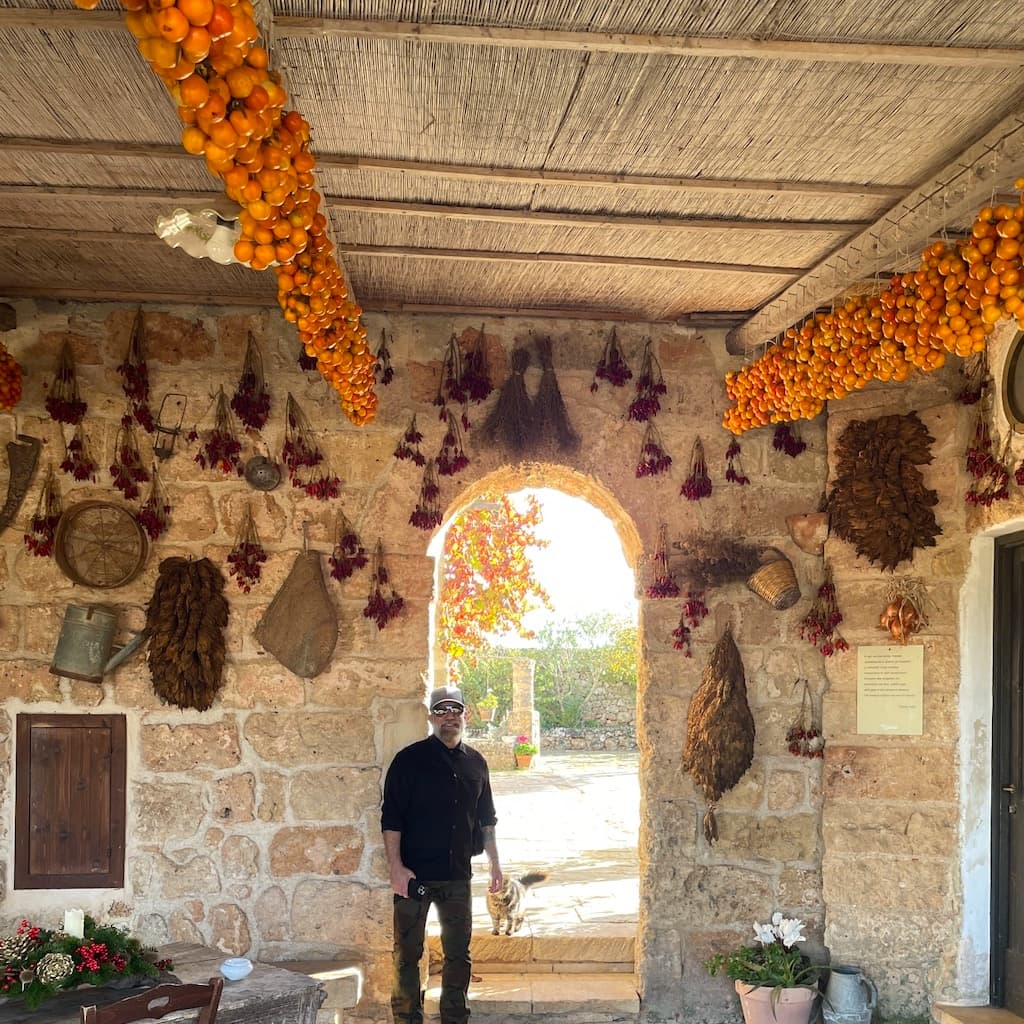
Across Salento, the masserie from centuries past are being reinvented as culinary destinations.
Across the countryside surrounding Galatina, low stone complexes emerge quietly from olive groves and open fields. At first glance they appear almost defensive — thick walls, interior courtyards, minimal ornamentation. These are the masserie, agricultural estates that once formed the operational backbone of rural life in southern Italy.
Built primarily between the 16th and 19th centuries, the masseria was never intended as a villa or country retreat. It was a system. High perimeter walls protected livestock and grain stores. Courtyards organized olive oil pressing, wheat threshing, cheese production, and seasonal labor. Architecture followed function: stone for insulation against summer heat, inward-facing design for security, and simple geometry for efficiency.
For centuries, these estates sustained local economies. Then, as agricultural production modernized in the mid-20th century, many fell into decline. What we are witnessing today is not simply restoration — it is reinvention.
Across Salento, a growing number of masserie have transitioned from purely working farms into culinary destinations. They have not abandoned the land. Instead, they are reframing the relationship between land and table.
From Production to Hospitality
The contemporary masseria occupies a careful balance. Some remain active agricultural enterprises; others operate as agriturismi, restaurants, or boutique accommodations. The most compelling examples do both.
Dining within a masseria is rarely about spectacle. The experience is rooted in continuity. Olive oil pressed from estate groves, grains grown in surrounding fields, vegetables harvested that morning, cheeses produced locally — these are not marketing gestures. They are the modern expression of an old system.
What was once subsistence agriculture has become a framework for regional cuisine. Rather than importing external culinary trends, many chefs refine traditional Salento recipes through a contemporary lens, preserving flavor and technique while elevating presentation and precision.
Reinventing the Masseria
Near Galatina and Palazzo Andriani, several estates illustrate how varied this evolution can be.
Masseria Le Stanzìe (Supersano)
A working estate known for deeply traditional Salento cuisine, Masseria Le Stanzìe offers perhaps the clearest expression of continuity. Much of what appears on the table originates in its own fields.
Guests consistently praise the authenticity of flavor and the rustic, time-worn atmosphere. The setting feels grounded in agricultural history rather than curated nostalgia. Reviews often highlight the warmth and attentiveness of the service, with staff invested in conveying the story behind each dish.
Some diners note higher pricing and a focused menu, but for many travelers, the experience represents an immersive introduction to Salento’s culinary identity — rooted, seasonal, and unapologetically local.
Tenuta Masseria Chicco Rizzo (Sternatia)
Located in the heart of Grecia Salentina, where the ancient Griko language still survives, this estate carries layers of history. Originally an 18th-century horse station along trade routes linking Otranto and Gallipoli, it later became the center of a large agricultural estate producing wheat, tobacco, cereals, and cheese.
Renovated over the past decade by descendants of the Carcagnì family, the masseria now operates as a refined agritourism destination surrounded by thousands of olive trees.
Guests describe Sunday lunches marked by abundant antipasti, well-executed first courses, and attentive, efficient service. The atmosphere is often characterized as intimate and “enchanted,” with careful restoration preserving architectural integrity. Here, history is not an accessory — it shapes the dining room itself.
Masseria Melcarne (Surbo)
Masseria Melcarne reflects another interpretation: contemporary dining within a historic rural framework. Known for well-executed regional recipes and high-quality local ingredients, it balances authenticity with accessibility.
The atmosphere remains relaxed and welcoming, suited to extended family gatherings and convivial meals. While service can slow during peak periods, the overall experience is widely regarded as dependable and reflective of Salento’s culinary traditions.
Masseria Montenapoleone (Pezzano)
Here, agriculture is explicitly central to the culinary identity. The estate promotes biodiversity, organic methods, crop rotation, and the preservation of ancient seed varieties such as Senatore Cappelli durum wheat and Saragolla.
The kitchen emphasizes seasonality — fruits, vegetables, olive oil, and wine produced on-site, complemented by carefully selected Apulian producers aligned with the estate’s philosophy. Tradition is respected but interpreted with contemporary refinement. The result is cuisine that feels thoughtful rather than theatrical.
Masseria Corda di Lana (Leverano)
Set within a larger estate environment, Corda di Lana pairs traditional Apulian dishes with regional wines. Its appeal lies in understated quality: fresh local ingredients served within restored rural architecture, offering guests space — both physical and experiential — to settle into the landscape.
Tenuta Monacelli (near Lecce)
A more expansive property, Tenuta Monacelli integrates dining within restored courtyards and gardens framed by dry-stone walls and centuries-old olive trees. The restaurant, Rifugio del Re, emphasizes conviviality and seasonal products, with breakfasts and evening meals designed to reflect the estate’s agricultural context.
Masseria Le Mandorle (Ugento area)
Focused on seasonal, locally sourced menus, this estate highlights how smaller-scale operations can deliver intimate dining experiences centered on freshness and regional identity.
Relais Santa Teresa (Sannicola)
Combining hospitality and estate dining, Relais Santa Teresa offers an à la carte restaurant open to external guests, with menus attentive to dietary needs including vegan and gluten-free options. Breakfasts and dinners alike emphasize high-quality local products and careful preparation.
A Living Landscape
What unites these varied examples is not uniform style but continuity. The olive groves, dry-stone walls, and open fields surrounding each estate are not decorative. They remain legible traces of a working system that shaped Salento for centuries.
To dine at a masseria today is therefore not simply to enjoy a meal in a picturesque setting. It is to encounter a landscape still in dialogue with its past — where architecture, agriculture, and cuisine intersect.
For guests exploring the countryside around Galatina, the modern masseria offers more than hospitality. It offers context. The flavors on the plate are inseparable from the land beyond the courtyard walls. And in that continuity lies the quiet transformation of the masseria: not abandoned, not fossilized — but evolving.